Guide · 9 min read
Can we do couples therapy ourselves with an app?
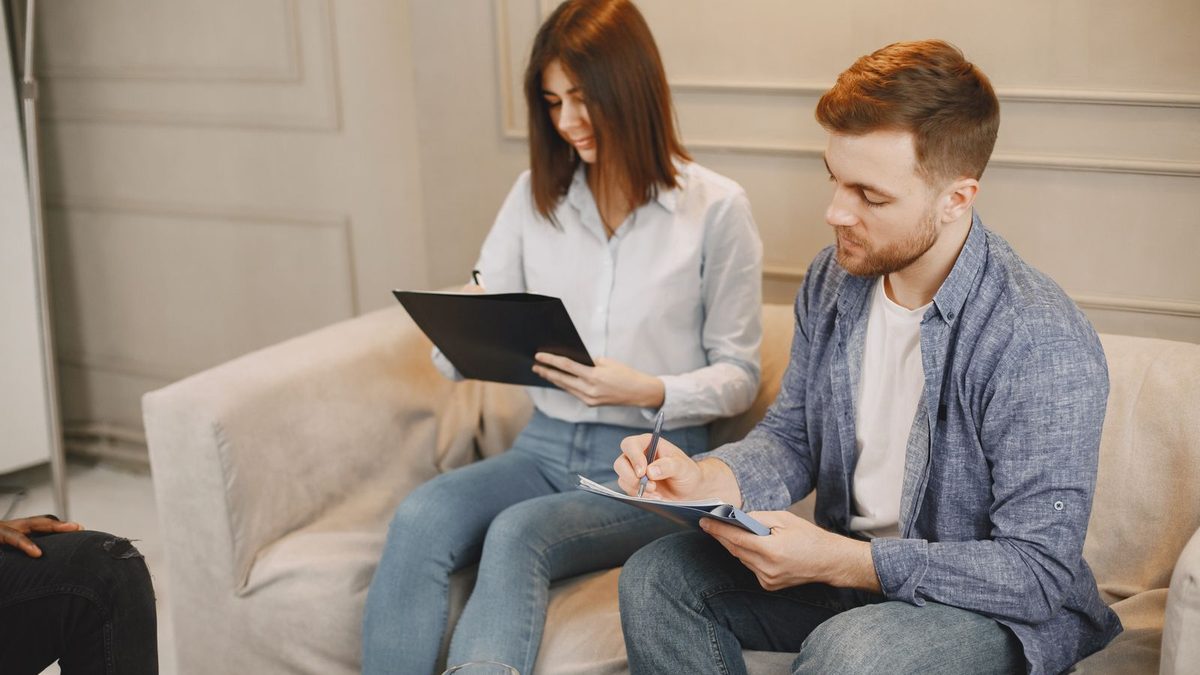
Key takeaways
- Therapy is a licensed clinical service you cannot do yourselves, but you can practice most of its skills at home.
- Trials of structured online couples programs found real gains, and finishing the program was the hard part.
- An app adds structure and a nightly rhythm, but it cannot assess, mediate a live fight or handle a crisis.
Can we do couples therapy ourselves with an app? Not therapy itself: that is a licensed clinical service. But you can do much of the skill practice at home. With or without an app, the two of you can learn calmer check-ins, softer complaints and repair. A licensed therapist is still needed for abuse, betrayal, or a pattern you cannot interrupt.
This guide is for couples who feel stuck but are not in crisis. Maybe a counselor costs too much, or one of you is not ready to book. It covers the research, a six-week home routine, what an app adds, costs, and when to see a professional.
Can you do couples therapy yourselves? The therapy part, no; the practice part, yes
Couples therapy is a clinical service, so you cannot do it yourselves, with or without an app. What you can do yourselves is the practice that sits around therapy.
A licensed therapist does three things you cannot copy at home. They assess what is going on, including mental health and safety. They sit with both of you as a trained, neutral third person. And they adjust the work to your couple, week by week.
Much of what couples learn in therapy is skill, though. You learn to raise a complaint without blame, listen, pause a fight and repair. Skills improve with practice, and practice happens at home. That is the part you can start on your own.
So the honest question is not therapy or app. It is how much you can practice yourselves, and when you need a professional.
What research says about couples doing the work themselves online
In randomized trials, couples using structured online programs improved more than couples on a waitlist. The gains were real but modest, and the trials had clear limits.
BMC Psychology's review of digital couples programs covered 15 randomized trials. Most found better relationship satisfaction, often still there at follow-up. Pooling six trials gave a moderate effect (g = 0.42). Results varied a lot between programs, and most programs included some human support.
The landmark example is OurRelationship, an online program adapted from Integrative Behavioral Couple Therapy. Its first test, a 2016 randomized trial of OurRelationship, randomized 300 couples to the program or a two-month waitlist. The program took about eight hours, plus four short calls with staff coaches who were not described as licensed. Relationship satisfaction improved compared with the waitlist (effect size d = 0.69, a medium effect).
The same paper is candid about its limits. It excluded couples with recent partner violence, an ongoing affair, serious suicidal thoughts, or plans to separate. It measured results only to the end of the program, not long term. The gains were about as large as an average in-person behavioral couple therapy, but smaller than its best forms. The authors conclude it is "less effective than high-quality couple therapy." Two authors hold rights to the program.
In 2023, an Internet Interventions trial with 740 low-income couples tested three versions of OurRelationship. One had coach calls, one automated emails, and one calls only for stalled couples. All three improved satisfaction compared with the waitlist. Completion ran from 54% to 65% across versions, so many couples did not finish the program.
A program with no coach at all shows the same pattern. In an Internet Interventions trial of PaarBalance from 2020, 117 distressed adults used the unguided program. They improved more than a waitlist. Yet only 21.2% completed most of the 18 sessions.
What this means for you: a structured, step-by-step program can help a couple who is unhappy but safe. Doing it consistently matters more than which tool you pick. None of these trials tested an AI coach, and none tested Pragma.
A DIY couples therapy routine at home: six weeks, week by week
A workable DIY routine is 15 minutes most nights, one 30-minute talk a week, and one new skill weekly. Here is a six-week plan built on the published exercises above and the Gottman Institute's guidance.
| Week | Skill to practice | What you do |
|---|---|---|
| 1 | A nightly check-in | 15 minutes, phones away. Each of you talks about your day while the other listens and asks questions. |
| 2 | Appreciation | Each night, name one specific thing your partner did. "Thanks for handling the school call." |
| 3 | A soft complaint | Raise one small issue with "I feel... about... I need...", not "You always...". |
| 4 | A pause signal | Agree on a word or gesture that means "stop, we'll come back". Take at least 20 minutes, then return. |
| 5 | Listening turns | On one recurring issue, one speaks for two minutes, the other sums up before replying. Swap. |
| 6 | Review | Ask what got easier and what still loops. Decide: keep going, add an app, or book a professional. |
The week-one check-in is close to the Gottman Institute's stress-reducing conversation. The Gottman Institute's article on this daily talk suggests 20 to 30 minutes. It adds: "It is not the time to bring up conflicts between you." Keep conflicts for the weekly talk.
The week-four pause comes from the Gottman Institute's article on stonewalling and flooding. A break "should last at least twenty minutes" so both bodies can calm down. Agree on the signal while you are calm, not mid-argument.
Give the weekly 30-minute talk an agenda: one thing that went well, one to work on, one small plan. Stop on time.
Try tonight
sit down for 10 minutes, phones in another room. Each of you finishes this line: "One thing you did this week that I noticed was...". The other only says "thank you" and asks one question. Then swap.
Download six "Try tonight" exercises as a PDF
What an app adds to doing couples therapy yourselves, and what it cannot do
An app adds structure, reminders and a third voice for each of you between talks. It cannot replace the trained person who assesses your situation and sits with both of you.
What an app adds. A daily prompt means nobody has to invent the conversation at 9 pm. A program with one task a day keeps the six weeks moving. A coach you talk to alone lets you think before you raise something. Reminders help with the hardest part the research found: finishing.
What it cannot do. It cannot see your faces or hear your tone in the room. It cannot step between you in a live fight. It cannot assess, diagnose or treat. It cannot make a reluctant partner take part.
There is one more risk with any AI you talk to. A Stanford-led study of 11 AI models in Science appeared in March 2026. The models affirmed users' actions 49% more often than humans did. One conversation with an agreeable model made people less willing to repair a conflict. So ask any AI coach "What am I not seeing?" and describe what happened, not who was right.
Pragma is one example: an AI relationship coach, not a therapist, and it does not diagnose or treat.
Each of you talks with it about 15 minutes a day, by voice or chat, on your own phone. For a structured version of the six weeks, see the 13 short programs in The Practice. Each runs 7 to 10 days, with one short task a day. One of you can start alone and invite the other with an 8-character code. Each person's words stay private; partners see completion and streaks, never transcripts.
The app does the reminding and the structure. The two of you still do the practice.
Signs you need a licensed couples therapist, not a DIY plan
You need a licensed therapist for safety, betrayal or a stuck pattern, or when six weeks of practice changes nothing. Notice that the online trials above excluded several of these situations.
- Fear or harm. Either of you feels afraid, or there is pushing, threats or control. Go to the help section below first.
- An affair or betrayal. Rebuilding trust after a betrayal needs a trained guide in the room.
- Contempt or shutdown in most fights. Eye-rolling, insults or one of you going blank every time. Learn to spot the four horsemen of conflict and their antidotes.
- A mental health or drinking problem. Depression, anxiety or alcohol use that needs treatment calls for a clinician.
- Deciding whether to stay. A therapist can help you decide without either of you steering the other.
- No change after six weeks. You practiced most nights and the same fight still loops.
If you are unsure where you stand, this short check sorts it out in a minute.
Two-minute self-check
Therapist, AI coach, or both?
Tick every line that is true for the two of you.
Tick what fits, and your answer shows here.
This is a guide, not an assessment. Download the checklist as a PDF
Getting help does not mean the home practice failed. You can keep practicing while you see a therapist.
What doing couples therapy yourselves costs compared with a therapist
Doing the practice yourselves costs only time, and an app costs far less than sessions. Therapy Cost Guide's current breakdown of couples therapy costs puts a 60-minute session at $150 to $300. Most US plans do not cover it: relationship distress alone is not a billable diagnosis.
Clear Path Couples' 2026 guide to couples therapy costs says a typical course runs 12 to 20 sessions. Without insurance, that comes to $1,500 to $4,000. The same guide puts virtual sessions at $80 to $200 and sliding-scale fees at $50 to $120.
An employee assistance program often gives 3 to 8 free sessions per issue a year. That figure comes from Therapy Cost Guide's page on EAP sessions and costs. Many EAPs include couples counseling.
Pragma's yearly plan is $119.99 per partner ($10.00 a month), or $19.99 billed monthly. For two people on yearly plans, that is $239.98 a year. That is about the cost of one counseling session, for a whole year. It is not a substitute for therapy. Try your own numbers below.
Cost calculator
What would a year of couples therapy cost you?
Pragma is a daily practice, not a substitute for therapy. Many couples use both.
For sliding-scale clinics, EAPs and other routes, read our low-cost options when couples therapy is too expensive.
When to get more help
This guide and an AI coach are not for abuse, danger, trauma or thoughts of self-harm. They are not for a mental health condition that needs treatment.
In the US, call or text 988 at any hour. The Domestic Violence Hotline is 1-800-799-7233. You can find more numbers in Pragma's list of crisis helplines.
For betrayal, or a pattern you cannot interrupt on your own, see a licensed therapist. Our guide to relationship coaching vs couples therapy explains how to choose.
Where to start with couples therapy at home
Start tonight with the 10-minute appreciation exercise above, then follow the six-week table. If even the check-in feels forced, read what to do when you don't talk anymore. It gives seven steps to restart the conversation. Several weeks above borrow from Gottman research, so the Gottman Method explained for couples shows the full approach. If typing feels stiff, read how talking to an AI coach by voice works. If the same pursue and withdraw pattern keeps returning, our free attachment style quiz for couples can help you see it.
If you want a coach to keep the six weeks moving, start your 7-day free trial of Pragma. No card to begin.
New to the topic? Our explainer on what AI couples therapy is and is not covers what an app can and cannot do.
Frequently asked questions about doing couples therapy yourselves
Can we do couples therapy ourselves with an app?
Not therapy itself, because couples therapy is a licensed clinical service. You can practice many of its skills at home, though: check-ins, soft complaints, pausing a fight and repair. An app can add structure and reminders. For abuse, betrayal or a pattern you cannot break, see a licensed therapist.
Do online couples programs actually work?
Randomized trials of structured online programs, such as OurRelationship, found that couples improved more than couples on a waitlist. The gains were modest, follow-up was often short, and many couples did not finish. The trials excluded couples facing violence, affairs or plans to separate.
How long should we try on our own before seeing a therapist?
Give steady practice about six weeks, most nights, then review honestly. If the same fight still loops, or contempt and shutdowns keep coming back, book a licensed therapist. Go sooner for betrayal, fear, or a mental health problem.
What if my partner won't do it with me?
Start with your own half: the check-in invitation, appreciation, and softer complaints. Change in one partner often changes the conversation. With some apps, one of you can start alone and invite the other later. You can also see a therapist on your own.